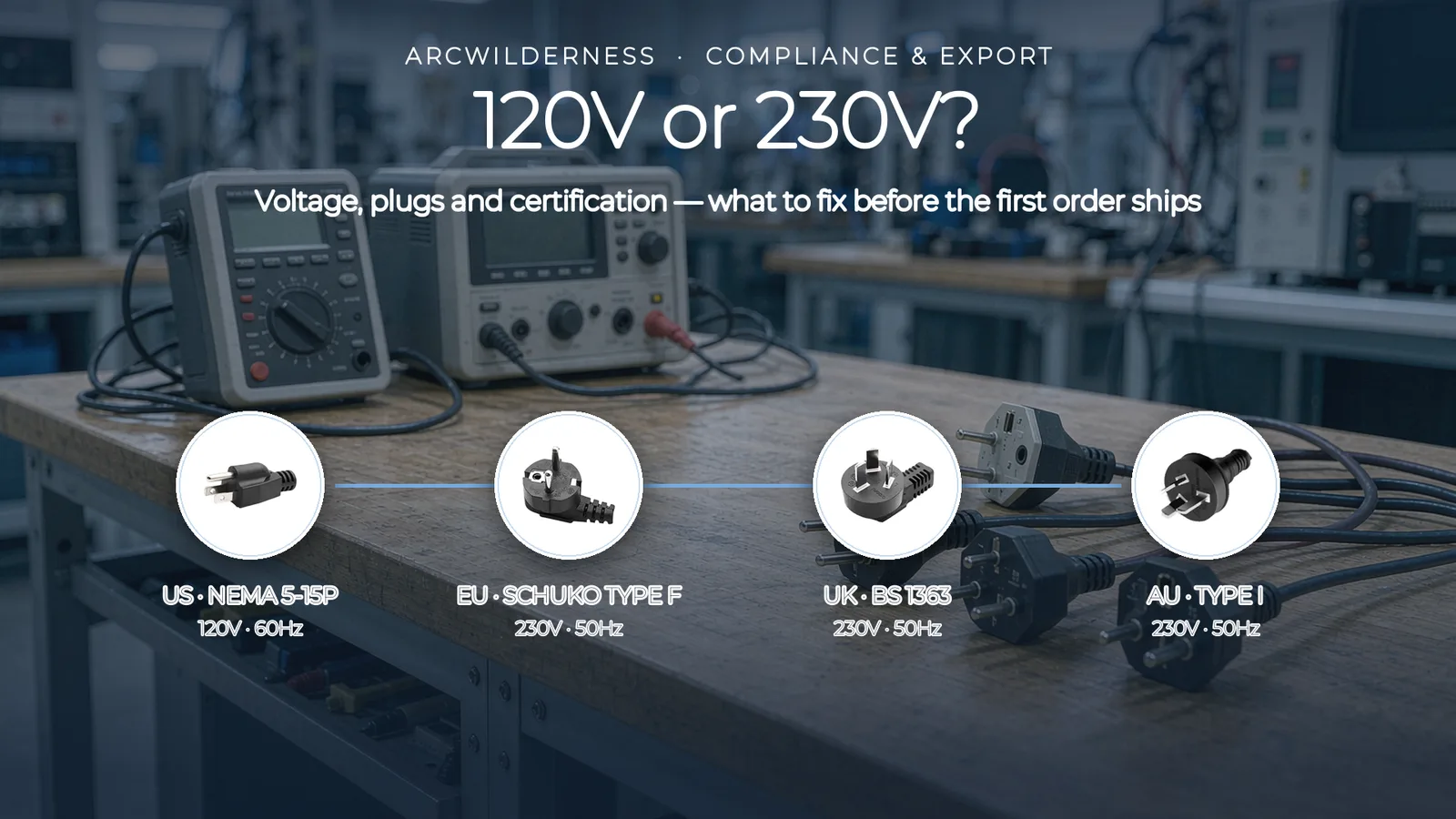
120V or 230V? Voltage, Plugs and Certification by Market
Aug 18, 2026 · 7 min read
The most expensive mistake in this category is not a failed compressor. It is a container of 230V units arriving in a 120V market, or a plug that nobody in the destination country can legally use.
The market map
Market
Voltage & frequency
Plug type
Certification to plan for
United States / Canada
110–120V, 60Hz
Type B
FCC, plus a safety listing or test report for the appliance standard
European Union
220–240V, 50Hz
Type C / F
CE (including EMC), RoHS, REACH
United Kingdom
220–240V, 50Hz
Type G
CE or UKCA — confirm the current requirement with your importer
Australia / New Zealand
230–240V, 50Hz
Type I
SAA / RCM
Japan
100V, 50 or 60Hz
Type A
Market-specific — confirm with your importer
Voltage and plug types are stable facts. Certification requirements are not: they change, and the importer is the party responsible for the file that enters the country. Treat this table as a planning aid and confirm the current requirement before the order is placed.
What our chillers support
Most of our chiller range is built for 110–220V, which covers the majority of export markets with a plug change. Some models run wider or narrower:
AIBC-900 — 100–240V
AC-J01 — 100–220V
AC-2N1 — 100–380V
AC-B01 — 220–380V
Three-phase configurations matter on the larger units, particularly the 3HP to 8HP high-capacity chillers, where the electrical supply in a commercial building is often the real constraint rather than the chiller. Ask what the building provides before you quote the model.
Certification: what we hold, and what we help you obtain
We supply CE, SAA, EMC, FCC, RoHS and REACH documentation and a UL 60335 test report. Where a market requires a certification we do not already hold, we help the brand obtain it rather than implying that we have it.
That distinction is worth testing with any supplier. An unearned certificate claim does not stay the factory's problem — it becomes the importer's problem when customs or a marketplace asks for the supporting document and somebody has to produce it.
Documents that should travel with the shipment
Commercial invoice and packing list
Certificate of origin
Test reports for the applicable standard where the market requires them
Carton markings and labelling that match destination requirements
Installation and maintenance notes in the language of the market
Three mistakes importers make
Ordering one voltage for a two-market launch — splitting the order by destination costs less than reworking units later
Treating the plug as a detail — a plug change is a configuration item, but only if the voltage already matches the market
Discovering the certification requirement at customs — raising it at sampling keeps certification and production timelines parallel instead of sequential
Send us the destination market with the specification. Voltage, plug, labelling and the certification path all follow from that one answer, and we quote them together rather than separately.
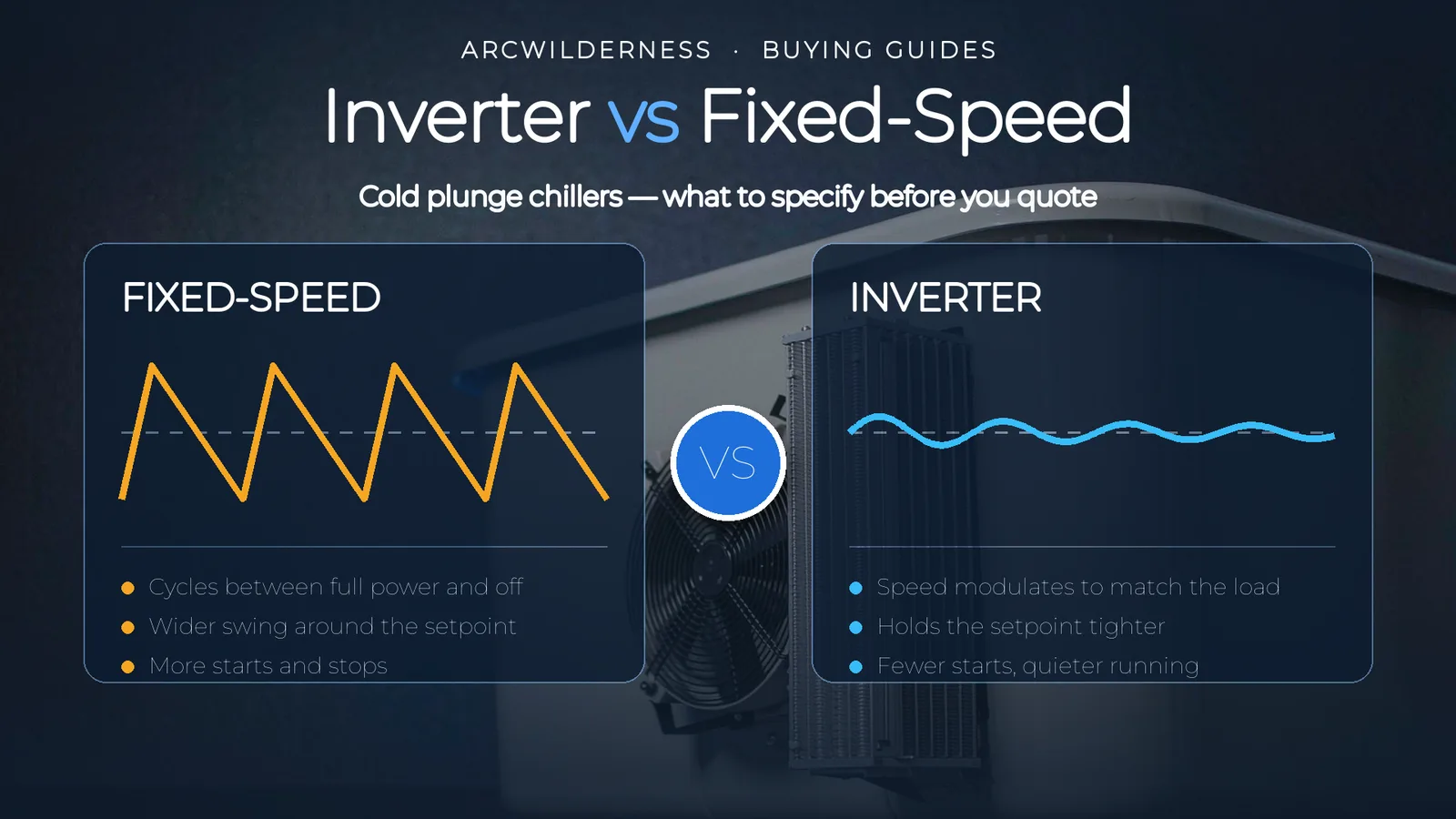
The compressor control type decides how a chiller behaves once the tub is at temperature — how tightly it holds the setpoint and how often it starts. Here is what to put in a request for quotation, and which standards answer each question.
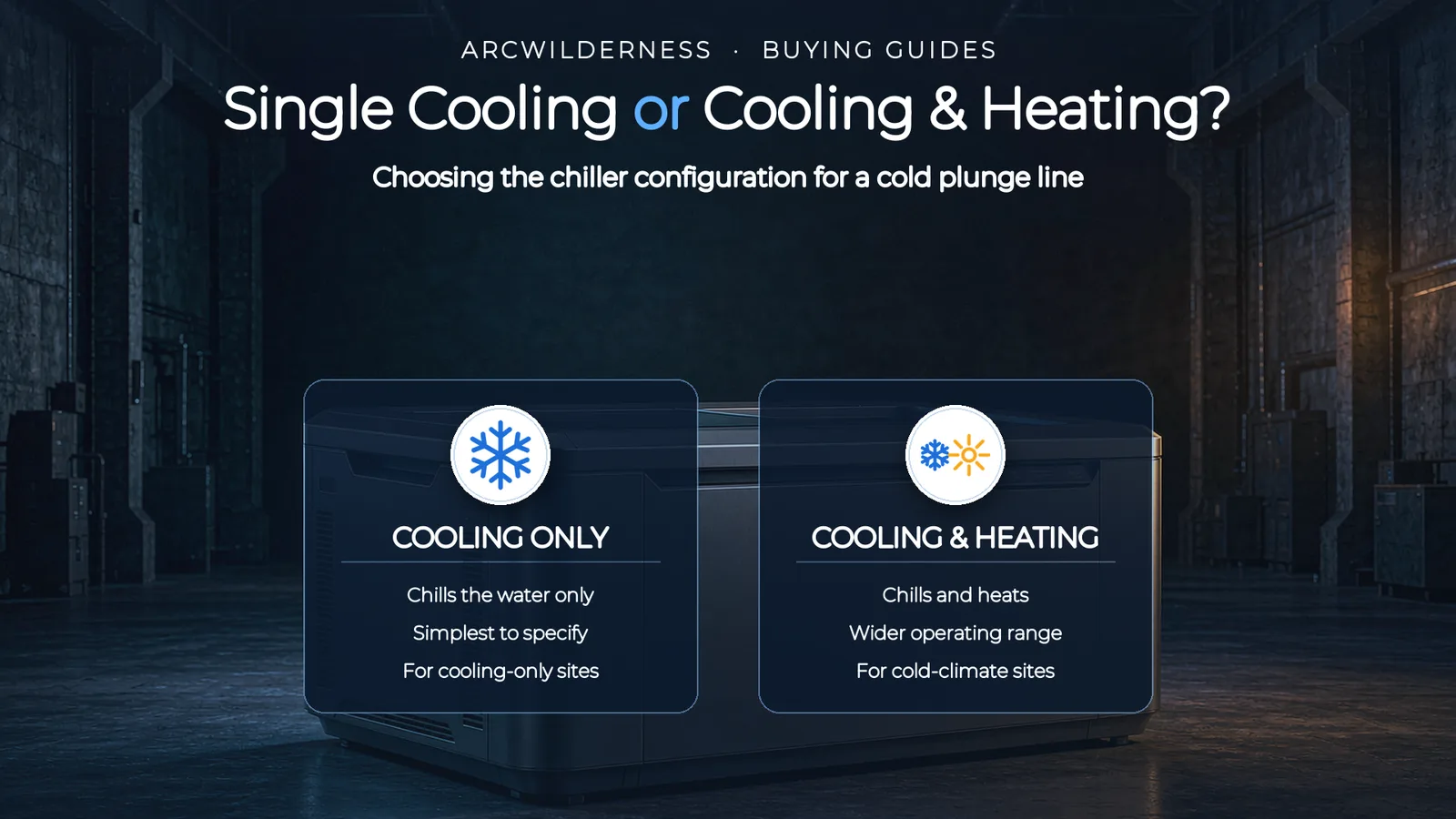
Most of our chiller range can be ordered as cooling-only or as cooling-and-heating, and one model does both at once. Here is how to decide per market, and how to write the configuration into the purchase order so the right unit is built.