Two chillers can share a horsepower figure and a catalogue photo and still behave nothing alike on site, because the number buyers compare is cooling capacity and the thing that decides day-to-day behaviour is how the compressor is controlled.
A capacity figure describes the hardest moment of the unit's day: pulling a tub down from tap temperature. The compressor control decides what happens during the other twenty-three hours, when the water is already cold and the only job left is to hold it there.
What a fixed-speed compressor does
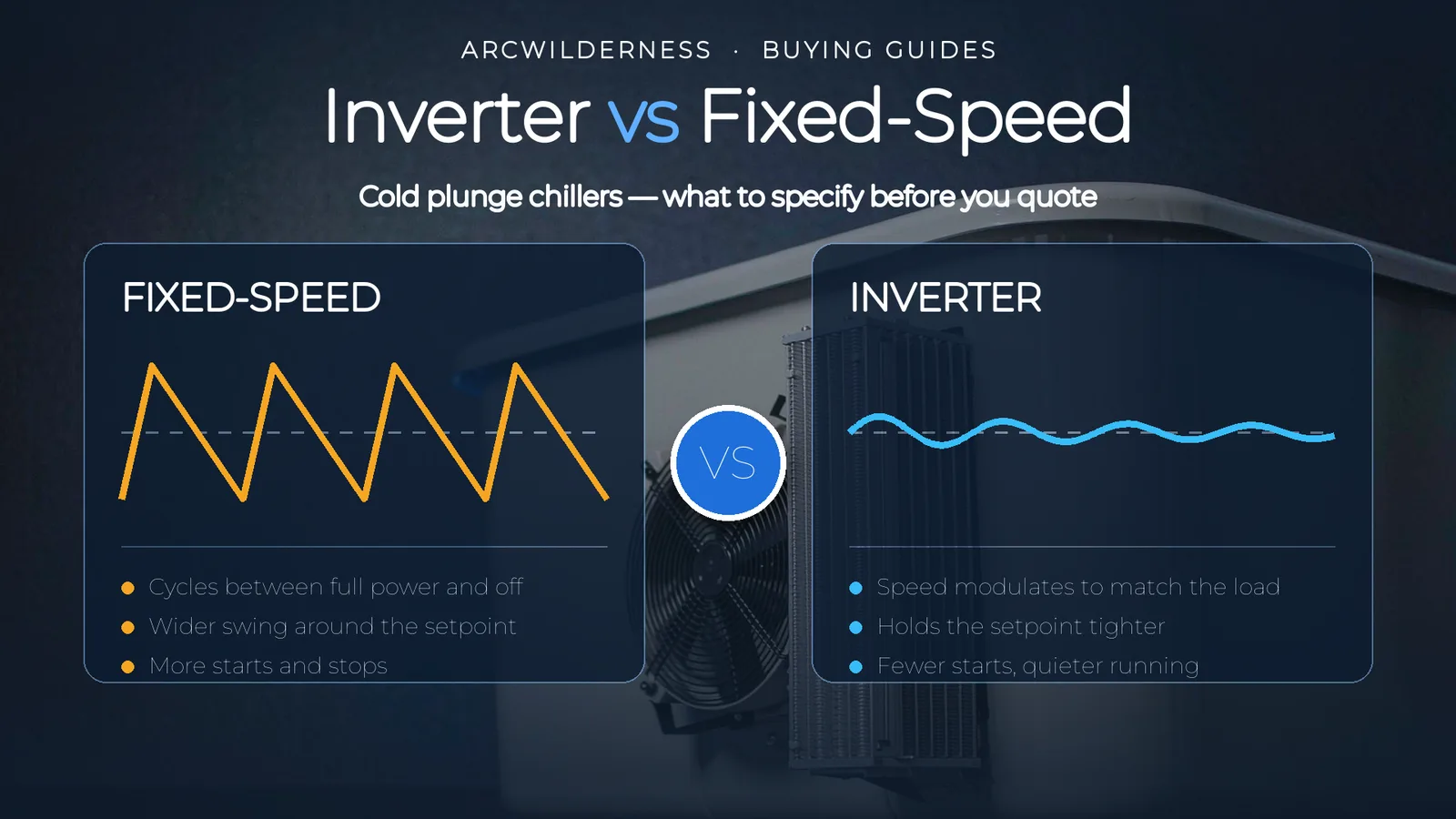
A fixed-speed compressor runs at one speed and is switched on and off by the thermostat. The water drifts a little above the setpoint, the controller starts the compressor again, and temperature holds in a repeating cycle rather than a flat line.
Each of those starts is a separate electrical event: an induction motor draws its highest current in the moment it starts, which is why motor and compressor makers publish starting performance separately from running performance. On a busy site the compressor can start and stop many times in a day.
What an inverter changes
An inverter — a variable-frequency drive — changes the compressor's speed instead of switching it. Capacity is modulated: the unit can run slowly and continuously at part load instead of running flat out and then standing idle.
That is also why the efficiency metrics used in regulation are seasonal rather than a single full-load number. Under Regulation (EU) 2016/2281 the chillers in scope are rated on SEER and SCOP — seasonal efficiency calculated at part-load conditions under EN 14825 — so a headline capacity figure on its own cannot tell you how a unit behaves across a year of part-load running.
If a supplier cannot say which compressor control a unit uses, they cannot tell you how it behaves at part load either. Put the question in the request for quotation and compare the answers rather than the pictures.
Five questions for your next chiller quotation
- Which compressor control does the unit use — fixed-speed, two-stage or inverter?
- At what conditions is the cooling capacity measured, and to which standard?
- Is there a seasonal efficiency figure (SEER/SCOP) for the unit, and which standard was it calculated to?
- How does the controller hold temperature at part load, and how wide is the switching band around the setpoint?
- What is the sound level at the low end of the speed range, not only at full output?
Where our own range sits
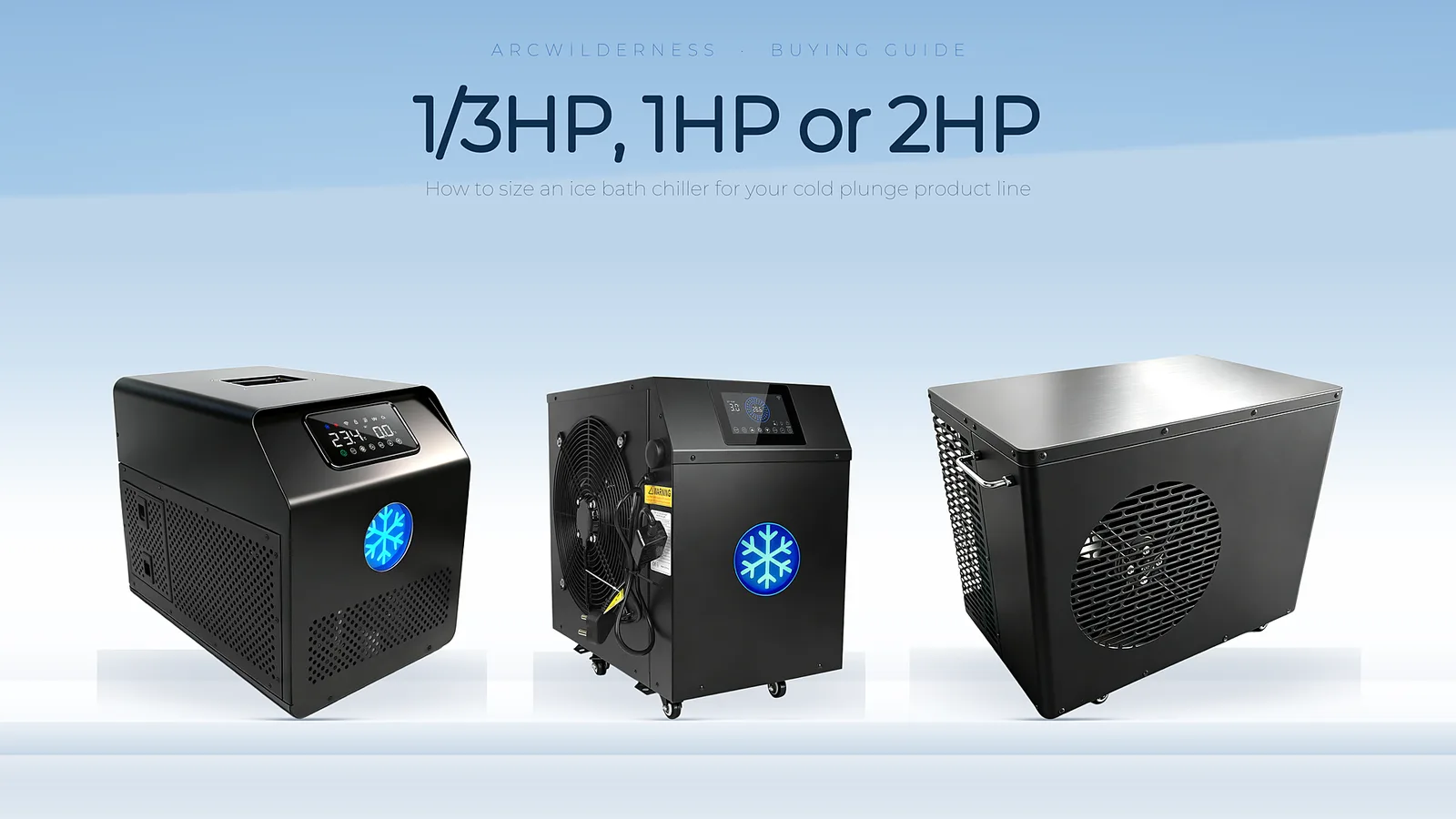
Our catalogue states capacity, configuration and options per model. The AC-L24 is a 24V inverter chiller built for cold sleep systems. For the ice bath chillers we confirm the compressor and control type model by model in the quotation, and their specification sheets carry standard capacity ratings rather than a seasonal figure.
We do not publish SEER or SCOP numbers for units that have not been tested to that standard. If your market requires the seasonal figure, raise it at the sampling stage so the compressor, the controller and the test documentation are quoted together rather than one after the other.
What this changes for a distributor
In the field the difference arrives as service calls. A unit that is switched on and off hard in a hot ambient, or one whose setpoint drifts between starts, produces complaints the factory never sees — and those complaints land on the brand.
If you are positioning at the premium end of a market that regulates seasonal efficiency, treat compressor control as a specification item. It belongs in the same conversation as capacity, voltage and certification, not in the small print.
Sources
- Commission Regulation (EU) 2016/2281 — ecodesign requirements for air heating products, cooling products, high temperature process chillers and fan coil units (EUR-Lex, CELEX 32016R2281): product scope and seasonal efficiency requirements.
- EN 14825 — testing and rating at part load conditions and calculation of seasonal performance: the standard behind SEER and SCOP.
- EN 14511 — air conditioners, liquid chilling packages and heat pumps with electrically driven compressors: the rating standard behind a nominal capacity figure.
- IEC 60034-12 — starting performance of single-speed three-phase cage induction motors: the reference for treating a start as an electrical event separate from running.
- Our own model data: every figure in this article about our range comes from the product pages in this catalogue, linked below.
The standards are cited by number on purpose: they are published by CEN/CENELEC and national standards bodies, and the EU regulation is free to read on EUR-Lex. Nothing in this article is a measured efficiency figure for a particular unit.
Tell us the market and the metric you have to hit. We quote the configuration, the compressor control and the documentation together, so the unit that arrives is the one your market can sell.