Single Cooling or Cooling & Heating? Choosing the Chiller Configuration for a Cold Plunge Line
Oct 8, 2026 · 6 min read
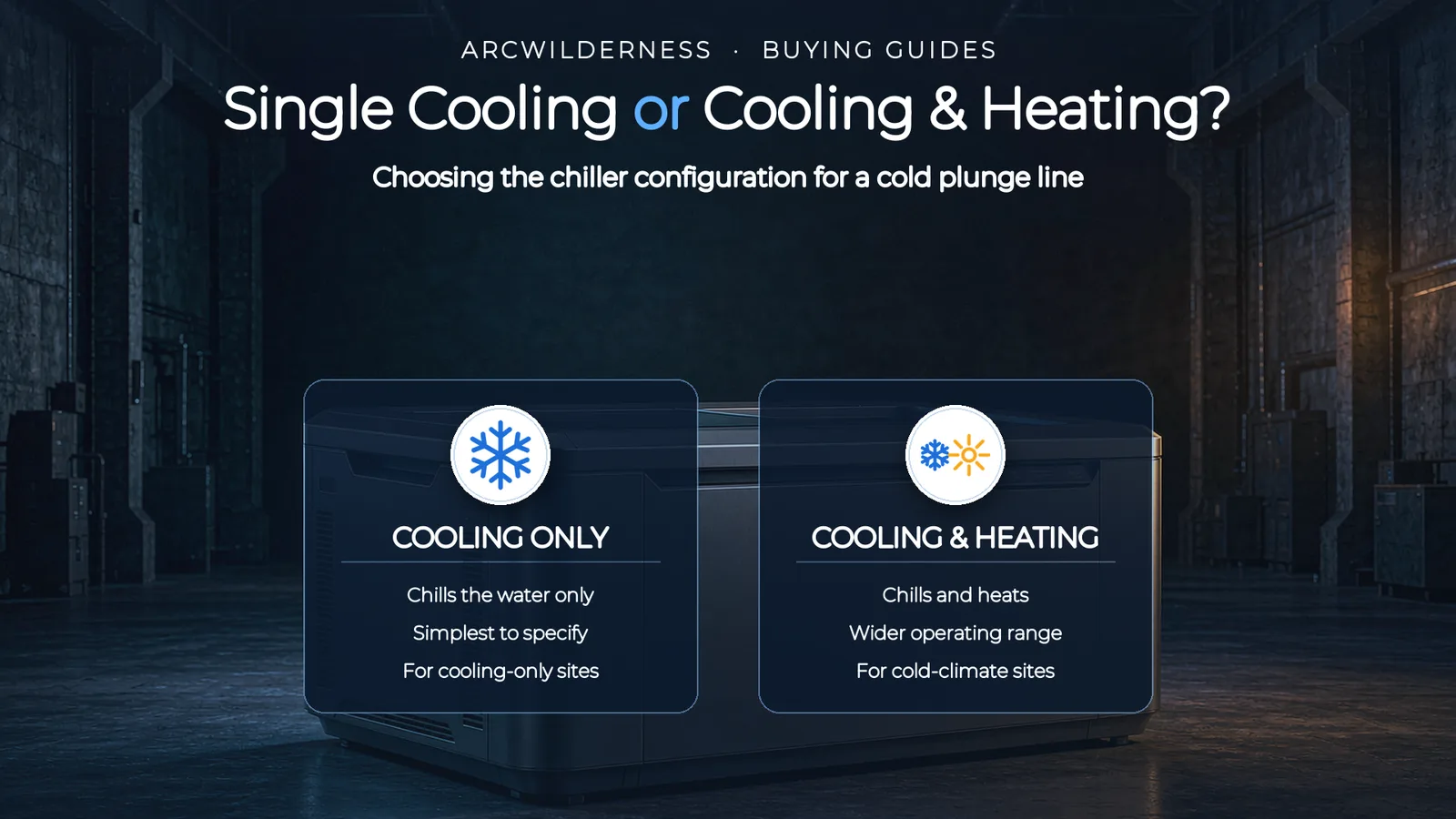
It is one of the first questions a new cold plunge brand asks: does the chiller have to heat as well? Both answers travel in the same container, so the decision does not change shipping — it changes what the units can do on the water.
The choice as it appears on our sheets
On several models the option is written into the specification sheet itself, as single cooling or heating and cooling. One model is a dual-tub chiller and heater from the start.
Model
Configuration on the sheet
Note
AC-F03
Cooling-only or cooling & heating
mid-range, three capacities
AC-J02
Cooling-only or cooling & heating
the cooling & heating build is catalogued as AC-J02(Cooling&Heating)
AC-J02(Single Cooling)
Cooling only
separate SKU for lines that never need heat
AC-F04
Cooling-only or cooling & heating
higher capacity
AC-J01 / -V0 / -V2
Cooling-only or cooling & heating
three face versions, identical specifications
AC-B01
Cooling-only or cooling & heating
3–8HP high-capacity range
AC-2N1
Dual-tub chiller & heater
one unit, two tubs: cools one while heating the other
AC-06, AIBC-900, AIBC-1500, AC-BI01
Cooling only
no heating option listed on the sheet
Read the table as the catalogue-level answer: the configuration is a property of the model and of the order, not an accessory that can be added afterwards.
When cooling-only is the right answer
Dedicated plunge rooms and recovery clubs, where the promise is cold water and nothing else
Markets where the unit runs every day of the year and a heating circuit would never be switched on
Entry price positions, where configuration is the cheapest lever on the cost of the unit
When cooling & heating earns its keep
Facilities that run both temperatures — a hot bath and a plunge on the same visit — so one unit covers the whole contrast session
Seasonal markets, where the same chiller holds warm water in winter and cold water in summer instead of standing idle
Studios and hotels where a tub sometimes has to serve as a warm soak rather than a plunge
The dual-tub AC-2N1 takes the idea further: one unit drives two tubs, cooling one while heating the other, which is how a two-tub contrast set-up is built from a single chiller instead of two.
Three things to settle before the purchase order
Configuration per SKU — list it line by line rather than once for the whole order
Voltage and plug per destination — voltage options differ by model, and a plug change only helps if the voltage already matches the market
Documentation and carton — which certificate set the destination requires, and what the manual and carton have to say under your brand
Write it into the order, not into an email
The most common configuration mistake is not technical: it is an order document that lists five chillers with no configuration line beside the SKU. Put the configuration on the purchase order and ask the factory to repeat it on the invoice, so the unit that arrives matches the one your market was promised.
Sources
Configuration, capacity and option data for every model above comes from the specification sheets in this catalogue, linked below.
Sampling and production windows quoted in our FAQ: sampling 7–15 days, production 25–45 days after the sample is approved.
Certificates: we list the ones we hold — CE, SAA, EMC, FCC, RoHS and REACH documentation plus a UL 60335 test report — and we do not claim a certificate we have not been issued.
Tell us the destination market and whether the tub has to heat. Configuration, voltage, plug and documentation all follow from those two answers, and we quote them together.
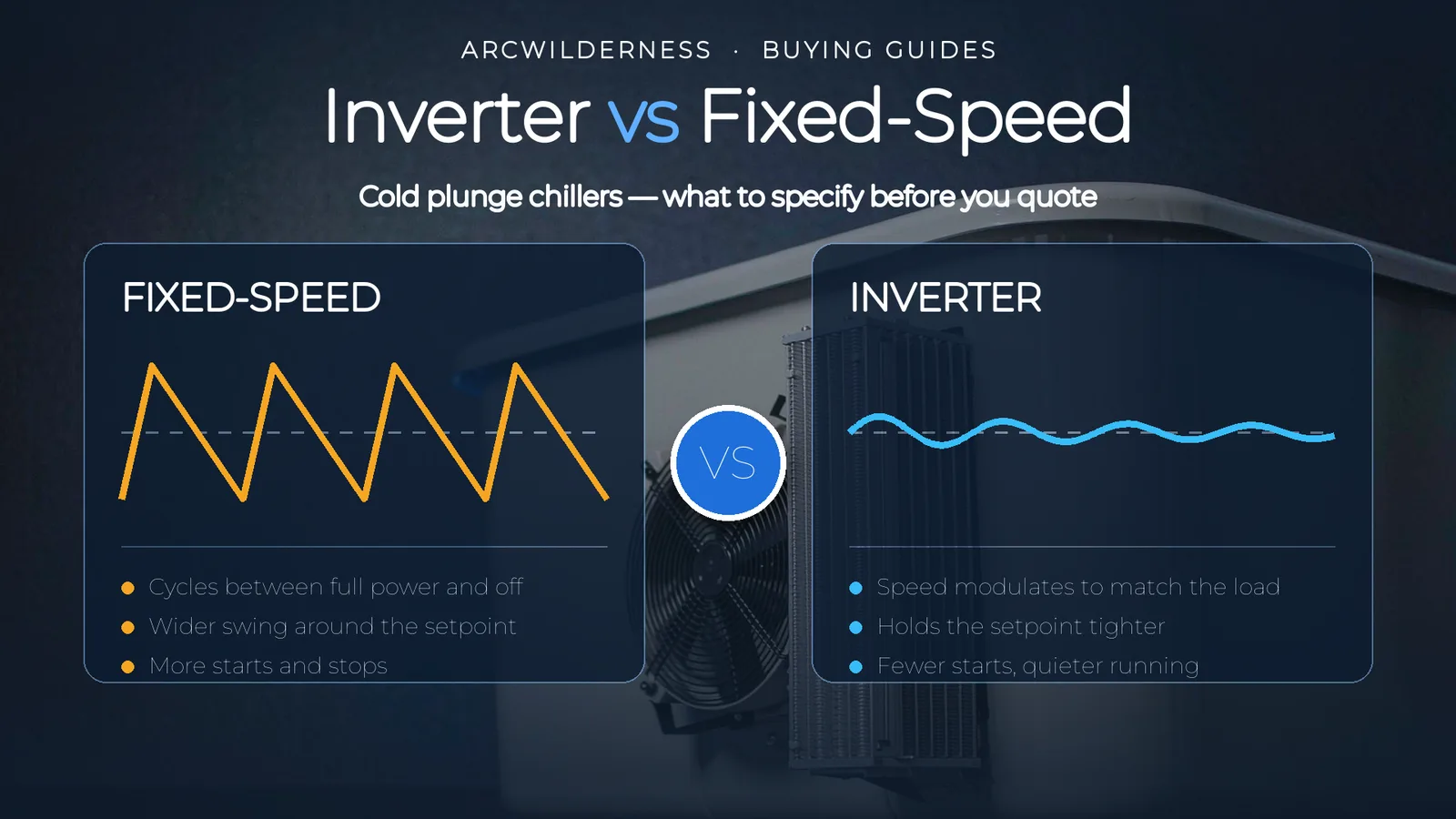
The compressor control type decides how a chiller behaves once the tub is at temperature — how tightly it holds the setpoint and how often it starts. Here is what to put in a request for quotation, and which standards answer each question.
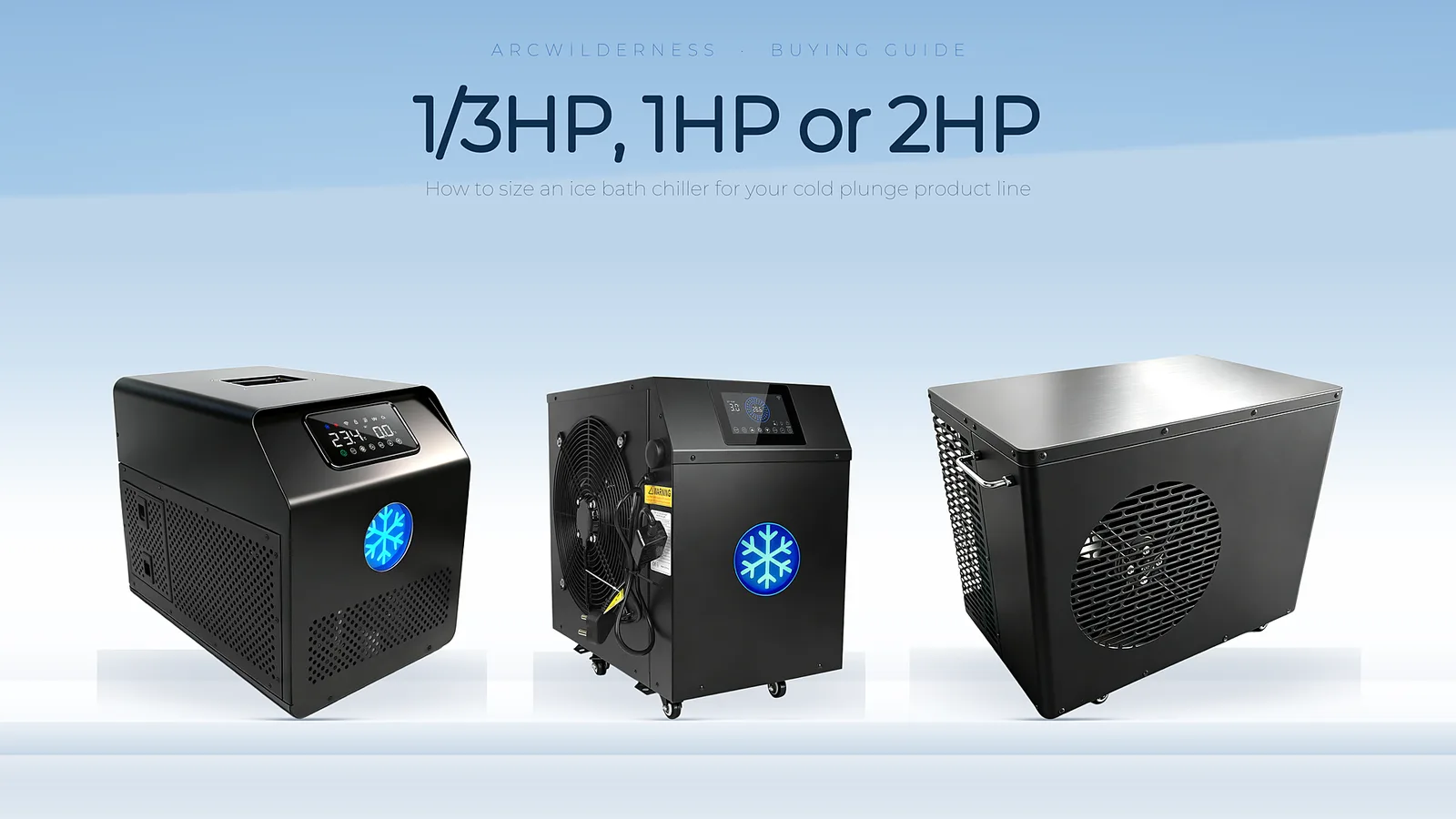
Four numbers decide which chiller a cold plunge brand should stock: water volume, ambient temperature, target water temperature and how often the tub is used. Here is how to read a specification sheet before you commit to a container.