OEM vs ODM for Cold Plunge Brands: What Actually Changes
Sep 15, 2026 · 8 min read
The difference in one sentence
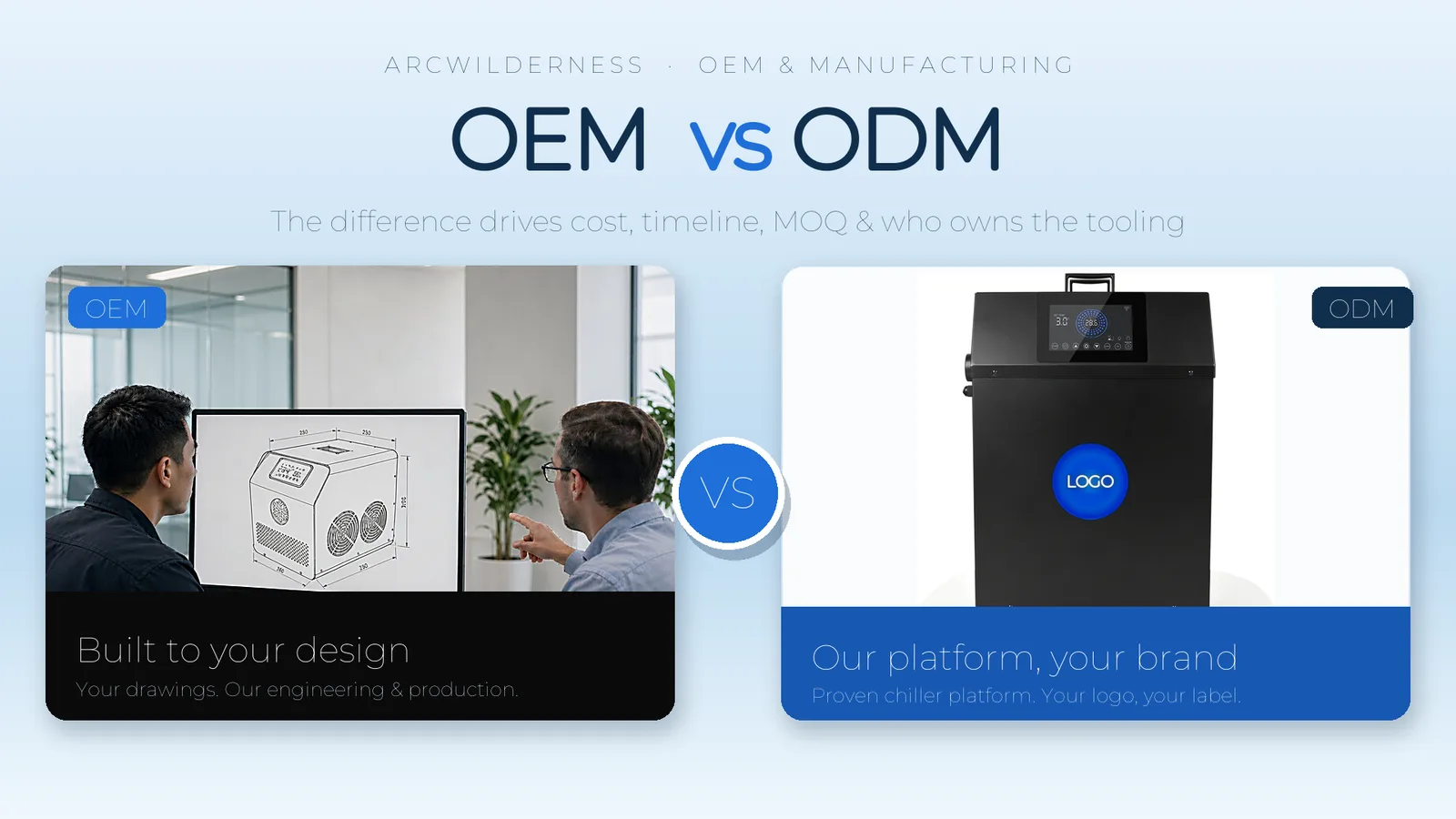
OEM means the factory manufactures to your specification and your brand. ODM means the factory owns the design and you put your brand on it. In practice most cold plunge programmes sit somewhere between the two, and the interesting questions are about what is customised, who owns the design, and what the minimum order actually is.
What can be customised
A realistic OEM conversation covers six areas. Ask which of them are tooling changes and which are configuration changes — tooling moves MOQ, configuration usually does not.
Housing and finish — colour, surface treatment, materials
Logo and branding — placement, illuminated logos, control panel layout
Compressor and platform — 1/3HP to 8HP, single or three phase
Controls and connections — control panel, app control, ozone and UV options, inlet and outlet fittings
Packaging and private label — carton artwork and accessory packing
Voltage and plug type — 110V / 60Hz, 220V / 50Hz, 220V / 60Hz and market-specific plugs
MOQ is per model, not per factory
One of the most common assumptions is that a factory has a single MOQ. Ours differs by model and platform, because the cost of setting up a run does:
Product
MOQ
AC-06, AIBC-900 chillers
50 units
Remaining chiller range
5 units
Stainless steel, wood and acrylic tubs
5 units
Most portable tubs
100 units
Floeberg pods and Ice Bath Incubators
300 units
ibt0001–ibt0003 portable tubs
500 units
Accessories
No MOQ
If your launch is small, the honest answer is not always the model you liked first. It is often cheaper to launch on a platform with a low MOQ, prove the market, and move to a custom platform once volume justifies it.
Timeline: what you are actually waiting for
Sampling takes 7–15 days, and mass production runs 25–45 days after the sample is approved, depending on configuration and volume. The sample stage is where you should be slow and specific: housing colour, logo behaviour, control panel language, plug type and packaging artwork all confirmed on the sample save weeks later.
Certificate timelines are separate from production timelines. If your market needs a certification that has to be obtained, start that conversation at the sampling stage rather than after the container is booked.
Tooling and exclusivity
Tooling and design ownership are agreed case by case. Depending on whether the design is patented and whether it is co-developed with the brand, the arrangement is exclusive or shared — and it should be in writing before production starts, not discussed afterwards. If exclusivity matters to your business, raise it with the first specification rather than with the first purchase order.
Certificates: what a factory can and cannot say
We supply CE, SAA, EMC, FCC, RoHS and REACH documentation and a UL 60335 test report. Where a market requires a certification we do not hold, we help the brand obtain it rather than implying we already have it — a distinction worth checking with any supplier, because an unearned certificate claim becomes your compliance problem when the customs paperwork is examined.
A practical way to start
Decide which two or three models carry your launch, and check their MOQ before designing around them
Send the destination market with the specification: voltage, plug and certification follow from it
Confirm what is tooling and what is configuration, so you know where MOQ moves
Settle tooling ownership and exclusivity in writing at the sampling stage
Plan packaging and accessories with the first order — reordering accessories later carries no MOQ
Brands that treat OEM as a specification exercise rather than a shopping exercise tend to launch later than planned but with fewer surprises in the field.
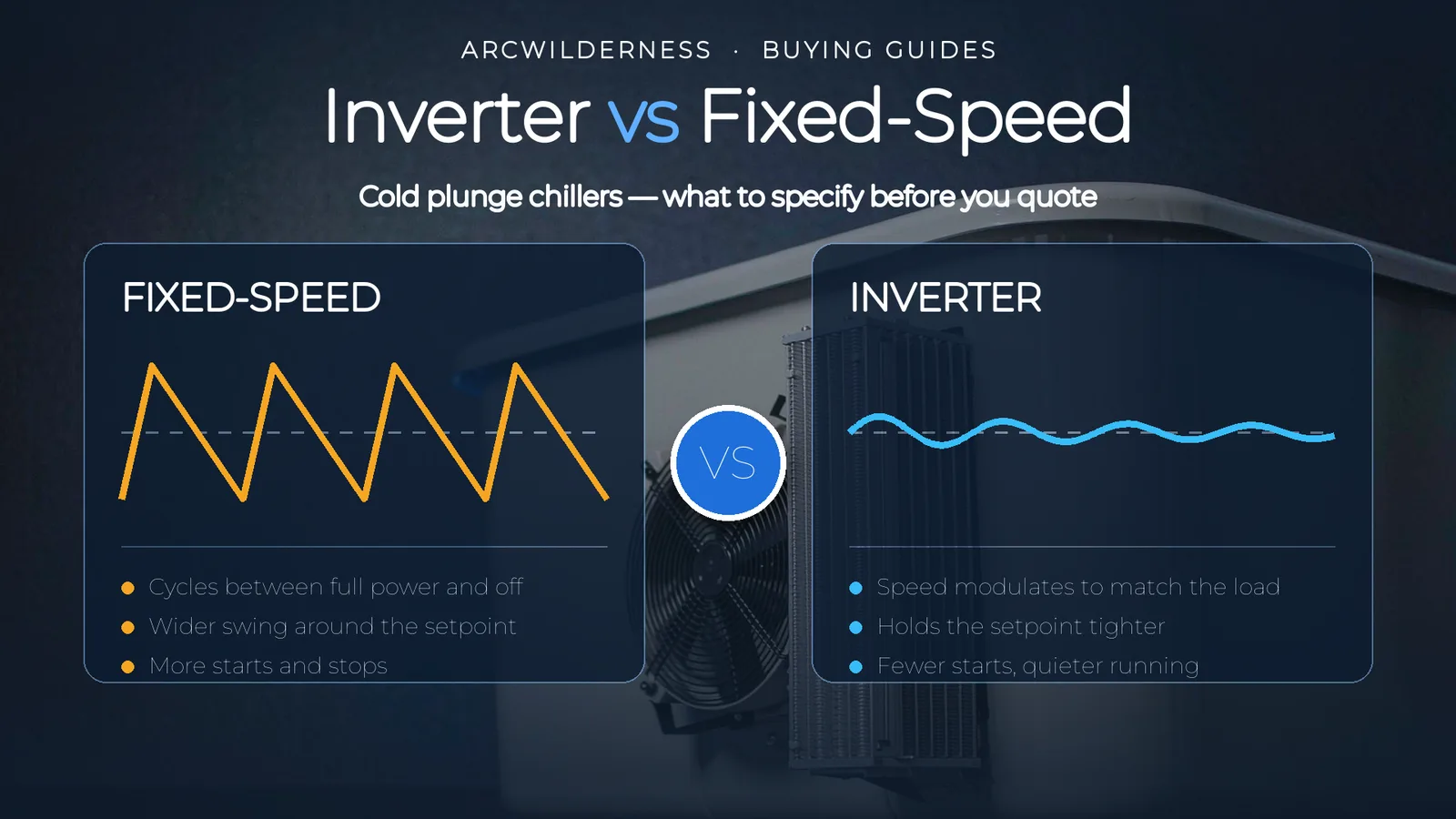
The compressor control type decides how a chiller behaves once the tub is at temperature — how tightly it holds the setpoint and how often it starts. Here is what to put in a request for quotation, and which standards answer each question.
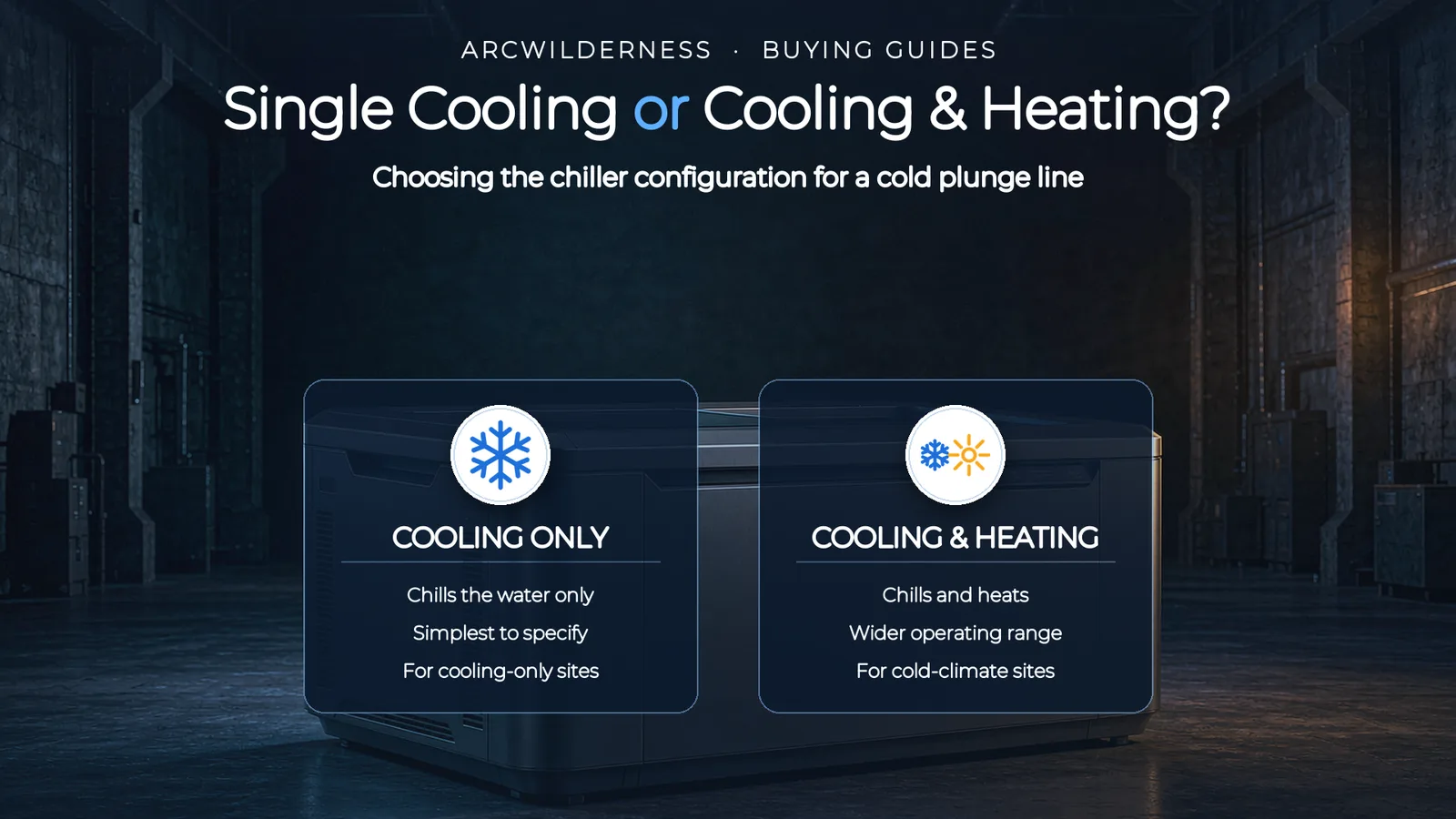
Most of our chiller range can be ordered as cooling-only or as cooling-and-heating, and one model does both at once. Here is how to decide per market, and how to write the configuration into the purchase order so the right unit is built.