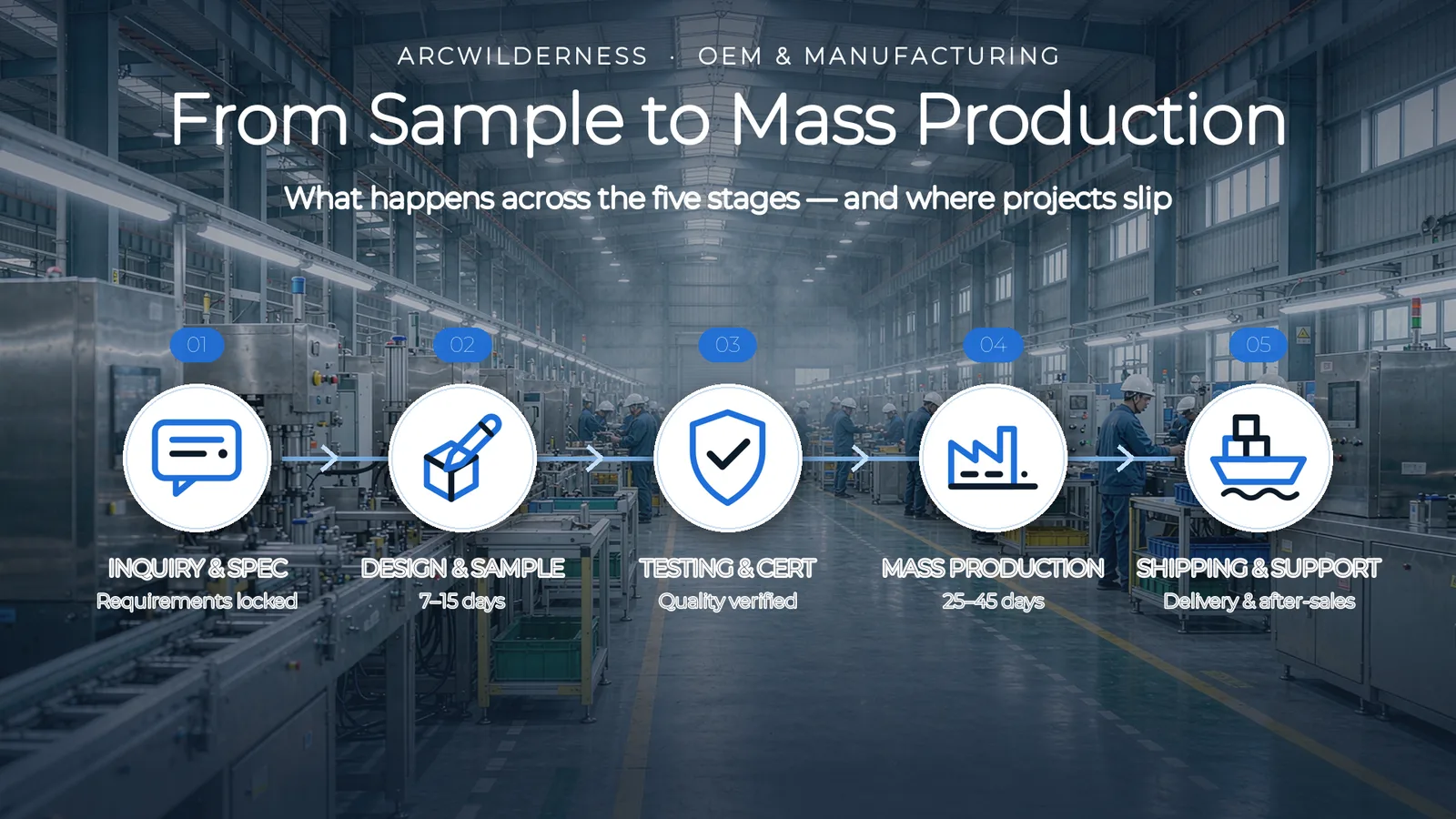
From Sample to Mass Production: What Happens, and What Delays It
Aug 25, 2026 · 6 min read
Buyers often treat the sample as a formality before the real order. In practice it is the last cheap moment in the project: every change made after it costs tooling time, production time or both.
Stage 1 — Spec freeze
Before anything is built, five things should be settled in writing, because each one touches tooling or paperwork rather than only appearance:
Voltage, frequency and plug type for the destination market
Logo placement, whether the logo is illuminated, and how the light behaves while the unit runs
Control panel language and units — °C, °F or both
Packaging artwork, carton markings and private-label requirements
The accessory and spare-part list that ships with each unit
If the destination market needs a certification we do not already hold, that conversation belongs here rather than after production. Certification timelines run alongside production, not inside it.
Stage 2 — Sampling: 7–15 days
The sample is where you check what a photograph cannot answer: how the control panel reads at arm's length, how the logo light looks in a dim room, how the housing colour behaves in your own showroom lighting, and whether the packaging survives handling.
Stage 3 — Approval and the tooling decision
Once the sample is approved the project splits in two. Configuration changes — colour, logo, plug, control settings, carton artwork — move straight into production. Tooling changes, meaning a new shell or a new internal layout, carry their own lead time and usually move the MOQ as well. If exclusivity matters to your business, agree at this point whether the design is exclusive or shared, in writing.
Stage 4 — Production: 25–45 days
Production is scheduled against your delivery date and configuration, and every unit goes through the full test procedure before packing — not sampling inspection:
Air tightness — brazed joints pressure-tested with nitrogen
Water circulation — pump, flow and water path checked for leaks and stable circulation
Constant temperature room performance — cooling measured under controlled ambient conditions
Full function test before packaging — controls, lighting and connectivity operated
Safety compliance checks to the applicable standard
Packaging confirmation — packaging, accessories and markings checked against the order
Stage 5 — Shipping and documents
Sea or air, FCL or LCL, with export documentation prepared with the shipment. Shipping to more than one market? Split the order documentation by destination from the start — retrofitting paperwork onto a mixed container is slower than planning it.
The five things that delay a first order
Ordering before the voltage and plug type for the destination market are confirmed
Changing logo, packaging or control panel after the sample is approved
Leaving certification for the destination market until after production
Assuming a tooling change carries the same MOQ as a configuration change
Approving a sample without testing the packaging it will ship in
None of these are manufacturing problems. They are decisions taken in the wrong order, and they are why a first order takes longer than the second one.
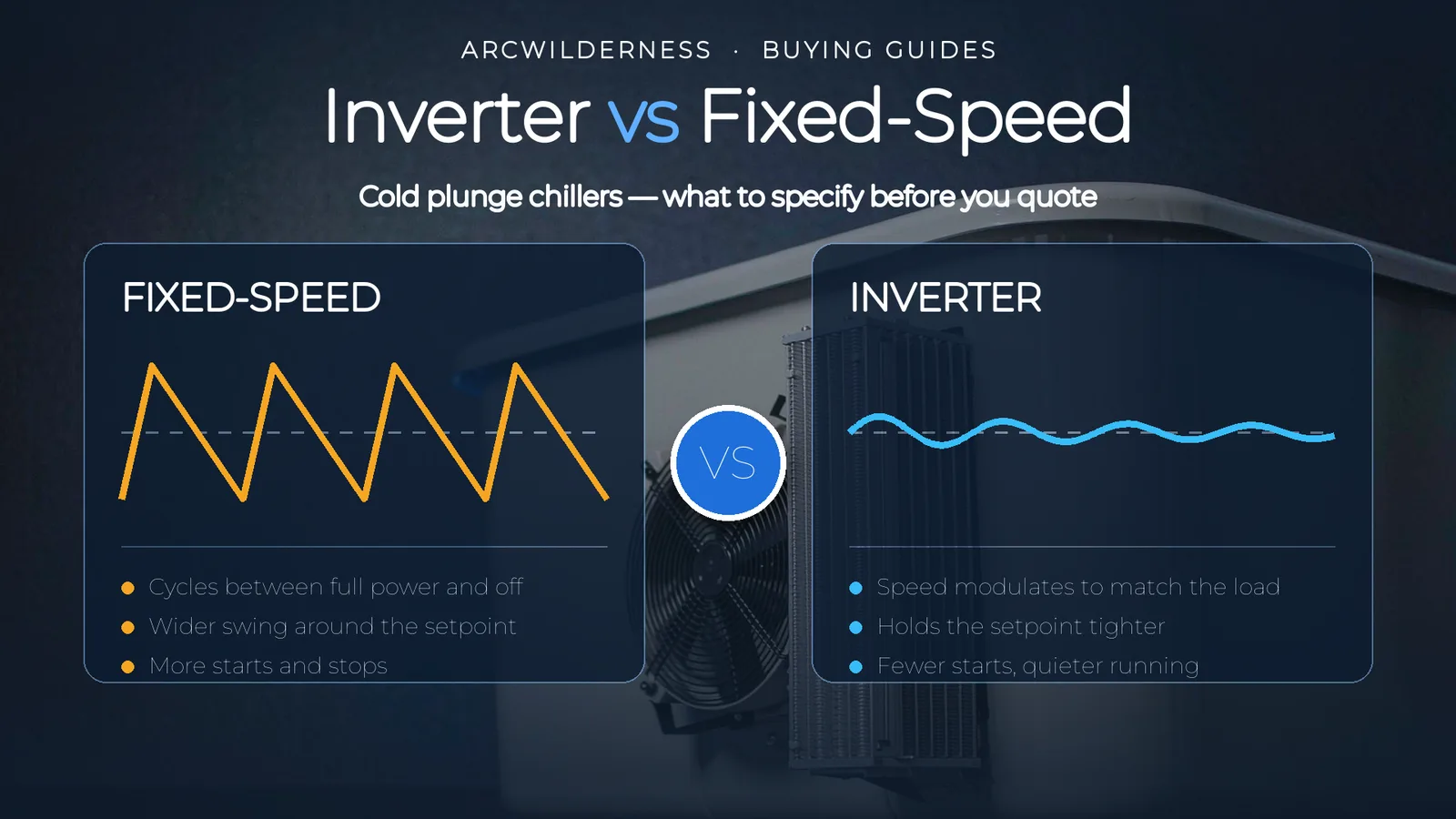
The compressor control type decides how a chiller behaves once the tub is at temperature — how tightly it holds the setpoint and how often it starts. Here is what to put in a request for quotation, and which standards answer each question.
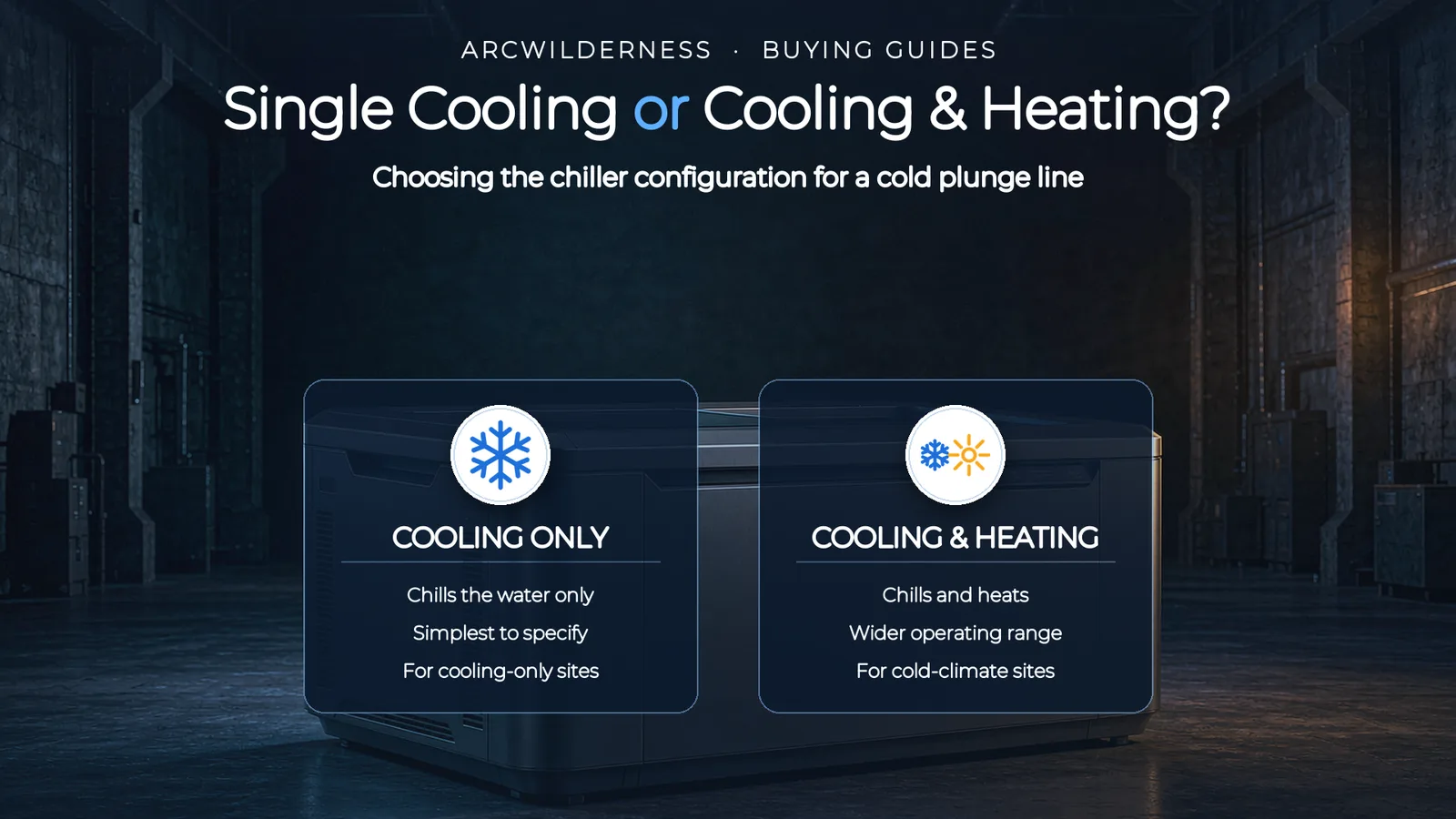
Most of our chiller range can be ordered as cooling-only or as cooling-and-heating, and one model does both at once. Here is how to decide per market, and how to write the configuration into the purchase order so the right unit is built.